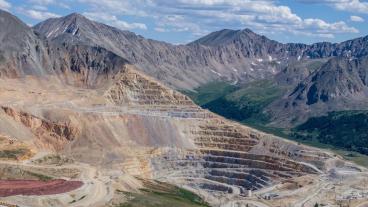
A new model for the formation of orogenic gold deposits developed by researchers at Colorado School of Mines could have significant implications on the exploration of much of the world’s known gold deposits.
Geophysics faculty, students and alumni at Colorado School of Mines are looking below the surface to enable innovation in energy, infrastructure, space exploration — and beyond.
Researchers at Colorado School of Mines are developing new technology that will enable mining companies to quantitatively model the carbon sequestration potential of copper-nickel-platinum-group element ore deposits.
"ASPECT will lay the groundwork for the surface construction and mining on other worlds," says Christopher Dreyer, professor in Mines' Space Resources Graduate Program.
The special award recognizes individuals who have made a specific technical contribution to exploration geophysics, such as an invention or a theoretical or conceptual advancement.
Five university teams from around the world descended on the Mines campus June 2-3 to demonstrate the systems they designed and built for moving lunar dirt, or regolith, around the Moon’s surface.
Four Mines professors will teach, conduct research and carry out professional projects around the world over the coming year after being selected as Fulbright Scholars.
Geology Professor Kamini Singha and postdoctoral researcher Joel Singley are members of the inaugural cohort of a new American Geophysics Union program to empower scientists to build sustainable partnerships with policymakers.