U.S. Congress turns to Colorado School of Mines for critical minerals expertise
Two Mines faculty members testify on minerals innovation and markets
Washington, D.C. — As the U.S. confronts rapidly growing demand for critical minerals essential to energy technologies, advanced manufacturing and national defense, Congress and federal policymakers are working to strengthen domestic supply chains and reduce strategic vulnerabilities.
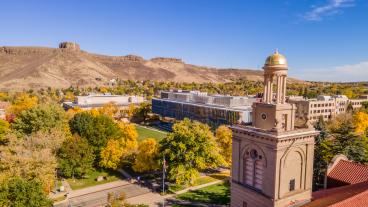
Colorado School of Mines, home to the world’s top‑ranked mining and minerals engineering program and the nation’s only dedicated mineral and energy economics program, has emerged as a trusted resource for policymakers seeking to understand the scientific, technological and market complexities of critical minerals. Mines’ expertise spans the entire mineral value chain, from exploration and extraction to processing, manufacturing, recycling, and mineral economics.
This week, two Mines faculty members testified before congressional committees and commissions on complementary aspects of the nation’s critical mineral challenges, underscoring the university’s leadership across geology, mining, processing, economics and policy.
Lange discusses critical mineral markets
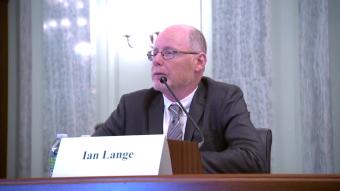
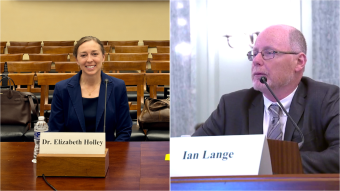
On April 16, Ian Lange, Viola Vestal Coulter Chair of Mineral Economics, testified before the U.S.-China Economic and Security Review Commission, a congressionally mandated body that examines the national security implications of the economic relationship between the United States and China. The hearing, “Pricing the Future: China’s Ambitions for Commodity Derivative Markets,” addressed critical minerals and the future of global commodity pricing and exchange mechanisms.
“China’s dominance in midstream processing and its growing influence over pricing mechanisms intersect directly with the small, volatile nature of critical mineral markets, creating real risks for U.S. supply chain resilience and national security,” Lange said. “Bringing transparency to critical mineral markets is essential to unlocking investment and enabling domestic production.”
Lange urged the commission to prioritize price‑based mechanisms, such as contracts for differences or price floors, over capital subsidies, which have failed to overcome China’s pricing power. He also encouraged policymakers to consider stronger demand‑side policies, including enforcement of domestic sourcing requirements, to create reliable markets and make U.S. and allied critical mineral production economically viable.
Holley testifies on mineral strategy and innovation
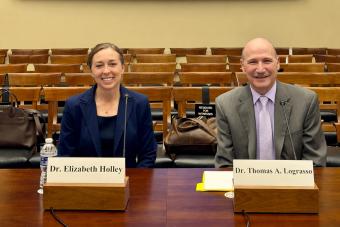
Across the Capitol, Elizabeth Holley, professor of mining engineering, testified before the House Committee on Science, Space, and Technology’s Subcommittee on Energy at a hearing on subsurface science and technology. In her testimony, Holley highlighted her National Science Foundation–funded research, which focuses on developing strategic frameworks to identify critical mineral supply opportunities and guide targeted research and investments.
“Critical minerals aren’t a single problem with a single solution,” Holley said. “Our interdisciplinary research brings together science, engineering, and social science to identify the right supply pathways for each mineral, so research and resource development investments can be directed strategically. Without a national, proactive strategy, federal investment in critical minerals becomes a game of whack‑a‑mole—reacting to Chinese export controls instead of building long term resilience.”
Holley expressed support for recent Department of Energy investments in critical minerals research, while emphasizing the need for a coordinated approach across mineral discovery, processing and analysis. She called for targeted DOE investment in geometallurgy — integrating geology, geochemistry, mineralogy, mining engineering, mineral processing, metallurgy, economics and data science — to reduce risk and unlock domestic critical mineral potential across the supply chain, noting the unique role of mining schools like Colorado School of Mines in maintaining this specialized expertise.
The testimonies are the latest examples of Mines’ ongoing engagement with Congress and federal policymakers. Mines faculty are regularly called upon by members of both parties and the administration for their expertise on issues ranging from the mining workforce and the federal critical minerals list to mineral innovation and market dynamics. Together, these engagements underscore Mines’ role as a comprehensive source for critical minerals expertise, combining world class education, cutting‑edge research and interdisciplinary insight to inform policy, investment and innovation across the full critical minerals lifecycle.

About Mines
Colorado School of Mines is a public R1 research university focused on applied science and engineering, producing the talent, knowledge and innovations to serve industry and benefit society – all to create a more prosperous future.