One of the biggest challenges in the U.S. critical minerals supply chain is in recovering valuable materials not only from traditional sources but also from resources that have already been mined.
Colorado School of Mines metallurgists are leading the way with creative new recovery and recycling methods, developing innovations in retrieving metals from end-of-life batteries, secondary resources like steel slag, and abundant but low-grade sources of copper.
Sustainable metallurgy for processing critical minerals, rare earths
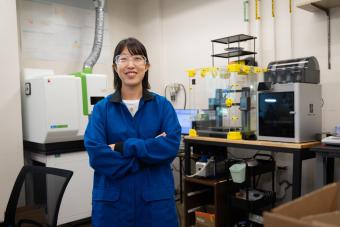
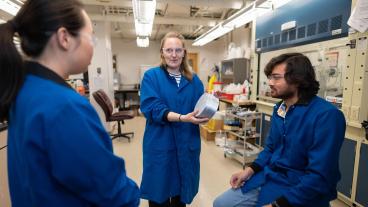
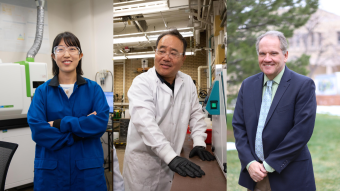
When Jihye Kim looks at industrial byproducts, she sees much more than waste.
“If you look at the right secondary feedstocks, some actually contain higher concentrations of valuable metals than many primary ores,” said Kim, an assistant professor of metallurgical and materials engineering. “Secondary feedstocks have a lot of potential to diversify the supply chain of certain elements, including some critical minerals.”
Developing sustainable metallurgical processes to recover critical minerals — including rare earth elements and battery metals from a variety of secondary resources, from steelmaking byproducts to end-of-life batteries — has become the main focus of her research group at Mines.
Steel slag and dust, two main byproducts of steel production, are often converted into construction materials. Kim's group is developing processes to recover valuable minerals like zinc, chromium, vanadium, titanium and nickel from these byproducts first, before enabling the remaining solids to be used for carbon sequestration and then as secondary construction materials. “You can get a two-fold benefit from these materials,” she said.
Steel slag and dust aren’t the only secondary resources that present processing challenges. “Critical metals often occur in complex matrices with many impurities,” Kim said. “Even if you find all of the valuable metals in one feedstock, you still have this major challenge of separating them into individual metals.”
Conventional processing can also be highly energy intensive. Her work addresses both problems by investigating novel methods that have a lower environmental impact while improving metal recovery and separation selectivity.
One method deploys microwave-assisted roasting to induce the phase transformations required to pull rare earth elements from feedstocks. Through collaborations with industrial partners and national laboratories in Vietnam and South Korea, her group has achieved nearly 100 percent rare earth extraction using this microwave-assisted method, which also has substantially lower energy consumption than conventional roasting.
Her two other projects focus on electrochemical recovery and separation of critical minerals from end-of-life lithium-ion batteries
Current recycling methods typically involve using inorganic acids and chemical reducing agents to dissolve waste-battery materials into a solution before recovering individual metals. Kim’s work – for which she recently received an NSF CAREER Award – investigates how electrolyte chemistry and carefully controlled electrochemical techniques, such as programmed voltage pulses, can selectively recover specific metals.
“When you apply voltage, each metal ion ‘feels’ it differently, and sometimes one gets pulled more strongly in one direction than another,” she said. “By taking advantage of those differences, you can achieve higher selectivity during metal recovery.”
Unlocking the industry’s critical minerals recovery challenges
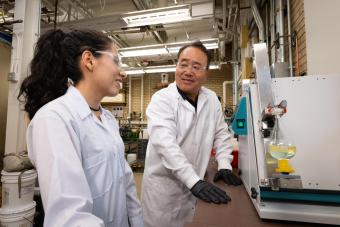
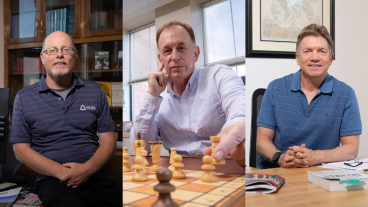
After many years of working in industry, Jaeheon Lee understands the need for practical technologies for recovering critical minerals and recycling secondary products. Lee, an associate professor of mining engineering and the associate director of the Kroll Institute for Extractive Metallurgy at Mines, has been leveraging this experience to investigate a variety of innovative solutions to real-world problems in metallurgy and critical minerals processing.
One of Lee’s main areas of research for many years has been developing a method called bioleaching for copper recovery. His research on copper extraction uses chemical methods and a combination of organic additives and microorganisms to improve recovery of the critical mineral from chalcopyrite, an abundant but low-grade source of copper that is typically expensive to process under more traditional methods.
A newer project of Lee’s proposes an alternative to the typical harsh chemicals used to recover rare earth elements from the magnets in electric vehicle motors. “Processing rare earth elements is usually chemically intensive and also time intensive,” Lee said. “With the new method I’m working on with my students, we can recycle four elements that are essential for magnets — neodymium, praseodymium, dysprosium and terbium — with an electrochemical method without using acid and alkaline.”
Lee is one of several Mines faculty working with the Center for Resource Recovery and Recycling (CR3), an industry-university research partnership focused on developing technologies to identify and separate valuable materials from waste streams. In CR3, member companies such as General Motors, Glencore and the U.S. Army Research Laboratory bring research projects to a team that includes researchers from Colorado School of Mines, Worcester Polytechnic Institute and KU Leuven in Belgium.
“Our work with CR3 is heavily influenced by what’s happening in industry, and it’s really practical research in recycling and secondary products,” Lee said. “The help from industry partners is significant — they’re willing to provide samples, and we provide the technical support.”
The CR3 research aligns with the critical minerals processing research Lee and other metallurgists are conducting at the Kroll Institute.
“Several of us at the Kroll Institute have worked in industry for a long time, so we know how it works,” Lee said. “That experience has given us opportunities to work on many different projects and different metals. It’s a collaborative effort, and we have a lot of experts with interesting backgrounds on so many critical minerals these days at Kroll.”
Unleashing a critical minerals processing workforce
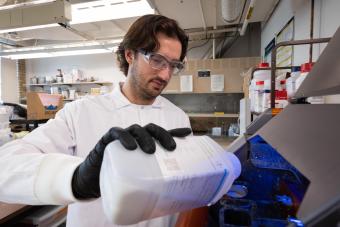
Growing the workforce in mineral and metallurgical processing is a key factor in unlocking the domestic critical minerals supply chain, said Corby Anderson, Western Harrison Professor of Mining Engineering and Director of the Kroll Institute at Mines.
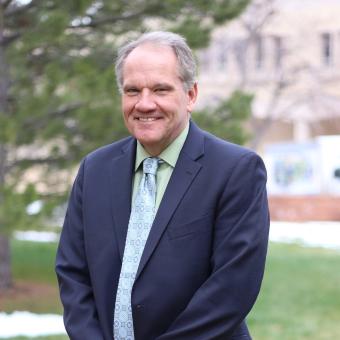
“The U.S. has an abundance of critical minerals,” Anderson said. “What’s missing is expertise in mineral processing and extractive metallurgy to take those critical minerals and turn them into the things we need.”
With the demand for critical minerals and metals rising, the researchers at the Kroll Institute have been busy, Anderson said. “We recently licensed four patents on rare earths processing, and another on waste automotive paint recycling to General Motors. We have ongoing research in both rare earths and other critical minerals, metals and materials.”
A leading global center of expertise in critical minerals processing and refining in the U.S. since 1974, the Kroll Institute is producing innovative research while also helping to close the domestic workforce gap in critical minerals processing. Graduate students engaged in research projects with Kroll faculty are focused on fundamental mineral processing, extractive metallurgy and applied engineering research that lets them enter the workforce ready to contribute and innovate in mineral and metallurgical processing, Anderson said.
“There’s very high demand for people with these specialized skill sets,” he said. “Our graduating students are not without high paying jobs.”
Anderson’s current research includes projects in platinum group metal recycling from smelting and tailings, Direct Lithium Extraction (DLE) and the recovery of rare earths used in magnets from monazite, which is abundant in the U.S. but challenging to refine due to its naturally occurring radioactivity.
Because industry partners bring their challenges to the Kroll Institute through CR3, the U.S. Department of Energy Critical Materials Innovation Hub or directly, students gain valuable expertise in industrial engagement and solving problems even before they’ve entered the workforce.
“All of our projects in the Kroll Institute have industrial engagement of some kind,” Anderson said. “We’re one of the few entities left in the world that has the capability to do teaching and research in mineral processing, extractive metallurgy and recycling and do it right.”
To learn more about Mines' leadership in critical minerals across the full value chain, visit criticalminerals.mines.edu.

About Mines
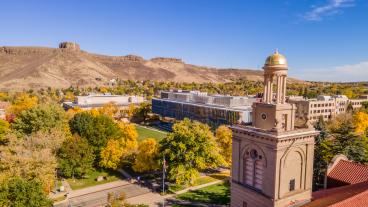
Colorado School of Mines is a public R1 research university focused on applied science and engineering, producing the talent, knowledge and innovations to serve industry and benefit society – all to create a more prosperous future.