Mines economists and policy experts lead global conversation on critical minerals markets and national security

By Jenn Fields, Special to Mines Newsroom
The conversation around the critical minerals supply chain begins with demand. Economists and policy experts are essential for understanding the markets and geopolitical forces that drive critical minerals supply chains—and which levers can make or break new technologies along the value chain.
As the only institution in the U.S. offering a graduate program in mineral and energy economics, Colorado School of Mines is a globally recognized center for research and learning in critical minerals markets. The team of experts at the Payne Institute for Public Policy investigates supply chain risk and the policy levers that drive those markets, hosting annual global conversations on policy at the Critical Minerals Symposium since 2021.
Ian Lange: Tracking market impacts for critical minerals
Like any market, critical minerals are subject to the basic principles of supply and demand. In these relatively small markets, new technologies can drive major market shifts up and down the value chain.
That’s why mineral economists from Mines have been in leadership roles with the U.S. Department of Energy’s Critical Minerals Innovation Hub since its inception in 2013.
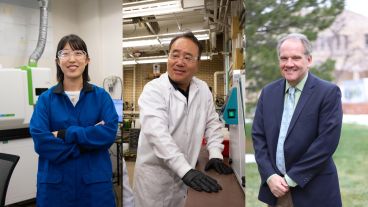
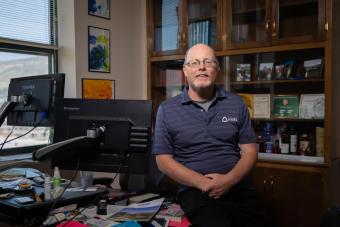
“Innovation takes a while to percolate,” said Ian Lange, professor of economics and business. “This is why economists are involved in the innovation hub. We try to look around the corner to see the potential impacts.”
Lange became the new deputy director of CMI in June 2026, succeeding Mines economist Rod Eggert, who served in the role for 13 years. CMI is a collaboration between national laboratories and universities focused on technical innovations in critical minerals needed for national energy security. The hub serves as an incubator for promising technologies that can improve domestic supply chains, provide substitutions or recover more critical minerals from existing resources.
Right now, Lange is following the market effects of a new magnet technology incubated at CMI that recently became commercially available. High-performance magnets manufactured using the technology, grain boundary diffusion, reduce the need for dysprosium or ytterbium, “heavy” rare earths that are difficult to separate from primary resources.
Until now, dysprosium and ytterbium have been in high demand to ensure magnet performance at high temperatures for wide-ranging uses, from transportation and energy technologies to health care. But the new technology is beginning to reverberate through markets.
“Grain boundary diffusion is successful CMI work that’s hitting the market now,” Lange said. “It’s limiting the demand for dysprosium and ytterbium, and it’s starting to call into question the need for heavy rare earths.”
The hub is currently supporting projects to recover more gallium, a critical mineral that’s in demand for semiconductors, cell phones, bluetooth devices and satellites. It’s abundant in the U.S. as a secondary resource, but China dominates the market for gallium processing.
“Gallium has a lot of uses, and it’s a byproduct of zinc and aluminum refining,” he said. “We have bauxite mining and refining processes in the U.S. West, but no one separates out the gallium. CMI is working on ways to recover that gallium from zinc tailings, and they’re partnering with U.S. companies and Mines researchers to find better ways of doing that.”
Mines brings rare expertise in mineral economics to CMI, and Lange and other faculty involved in CMI projects are also providing a unique educational opportunity for graduate students.
“Mines’ mineral economics program is training people to think about these issues in critical minerals,” Lange said. “We’re the only mineral economics program in the United States. No one else is training these economists, and we have alumni in high places as a result.”
Tom Brady: Bringing industry experience to a unique mineral economics program

In his work as an economist specializing in mineral and energy commodities, Tom Brady often works on two timelines: the multi-decade process of mineral development, and the daily churn of global events that move those markets on an hourly basis. Threading that needle is what keeps things interesting after years in the industry.
“Every day is different,” said Brady, a professor of practice in economics at Mines who previously served as chief economist for Newmont Mining. “There’s always some geopolitical event or disruption that makes it interesting. What’s going to impact the markets?”
Brady, who continues to work as a consultant in economic analysis and valuation for energy and mineral commodities, including critical minerals, brings an applied approach based on his industry experience to both the classroom and his research with graduate students at CMI. He has focused on rare earths, lithium and cobalt, as well as exploring how the U.S. can use existing processing facilities to secure the domestic supply of gallium and germanium.
As an industry professional, he knows what kind of expertise students will need when they enter the workforce, but he’s also an alum who earned his PhD in Mines’ mineral and energy economics program – the only program of its kind in the U.S. and one of only two in the world.
“When I was going through the program, I appreciated that it was a mix of academics and industry people, because it helps give students a blend of how to apply this in the real world,” Brady said. “Our program offers graduates a lot of flexibility. I spent a lot of my career in finance and strategy positions, and I was able to jump from mining and minerals to energy and then back to mining.”
Brady teaches a course in mineral policy and international investment that examines how governments think about attracting mining companies, and in turn, what companies need to look for in a government before they invest. This fall, he’s co-teaching a new course in commodity trading. “My real interest in critical minerals is how these markets trade, how price discovery occurs, and the geopolitics go with that,” Brady said.
He’s also invested in educating public officials about the importance of mining critical minerals, and how policy affects the domestic market, from discovery to resource recovery to processing and valuation.
“Over the last year, we’ve seen a lot of export controls from China, particularly around rare earth elements,” Brady said. “What are the policy actions that Western governments can take to tackle this problem? What are the pluses and minuses that we can offer to help educate policy makers?”
“There’s a lot of uncertainty, but our society depends on critical minerals,” he said.
Morgan Bazilian: Supply chain analysis sheds light on critical mineral needs for defense, data centers

The demand for critical minerals extends into many key sectors of the U.S. and global economy, including two that have made many headlines in 2026: defense and data centers. At Mines’ Payne Institute for Public Policy, this has meant vibrant research, convening, teaching and communications to inform policy and investment conversations around critical minerals.
“Looking at supply chain security for critical minerals is front and center for U.S. policy, both domestic and foreign,” said Morgan Bazilian, director of the Payne Institute. “Supply chains for the defense industrial base is core to our work, but we are also using the same genre of analysis to look at supply chains for AI data centers.”
Bazilian previously served as a Lead Energy Specialist at World Bank and has more than two decades of experience in resource and energy policy. He is currently a member of the Council on Foreign Relations, a global fellow at the Woodrow Wilson International Center and a fellow at the Atlantic Council.
This spring, Bazilian and colleagues at Payne analyzed the critical minerals and rare earths supply chain for the 11,000 munitions expended in the first 16 days of the Iran War to understand the risk of depleted stockpiles and industry’s ability to replenish them. His op-ed in the Washington Post, co-authored with Payne Fellow Lt. Col. Jahara Matisek, explained why some U.S. fighter jets are being built without next-generation radar: they require high-purity gallium, which the U.S. does not produce.
There’s overlap with data centers, which use gallium in semiconductors. Recent research from Payne investigated the demand for 20 critical minerals for data centers, quantifying the demand for indium, tungsten, erbium, copper and other minerals to understand AI buildout beyond the data center walls.
“We’re looking under the hood at the full supply chains, including inside the semiconductors, to identify risks,” Bazilian said. “Our research shows the places where those supply chains aren’t functioning, and that could end up being a hinderance to the speed, supply and development of both defense and AI.”
The Payne Institute has hosted an annual Critical Minerals Symposium since 2021; the 2026 symposium will take place Sept. 24-25 on the Mines campus.
To learn more about Mines' leadership in critical minerals across the full value chain, visit criticalminerals.mines.edu.