Colorado School of Mines to receive proposed $32.7M federal investment for critical minerals tech hub
Colorado School of Mines is slated to receive a proposed $32.7 million federal investment for the Critical Minerals Innovation and Commercialization Hub to accelerate critical minerals technologies from lab to market, President Donald Trump and the Department of War announced Friday at an event hosted at the U.S. State Department.
A delegation from Mines traveled to Washington, D.C. to participate in the Administration’s announcement highlighting the economic and national security importance of the U.S. mining sector.
Among the Mines delegation was Mines President Paul C. Johnson; Bill Zisch, J. Steven Whisler Chair for the Head of Mining Engineering; and two undergraduate students majoring in mining engineering, Sydney Sessions and Forest Olsen. University leadership and students from all 14 mining programs in the U.S. were invited to the event, during which President Trump also announced a separate $100 million Department of Energy grant program to strengthen America’s mining and critical minerals workforce.
"Meeting the nation's growing demand for strategic and critical minerals requires a larger, highly trained workforce, deep expertise across the entire mineral value chain and the ability to innovate quickly – Colorado School of Mines has a proven record of delivering all three," said Colorado School of Mines President Paul C. Johnson. “We thank President Trump and the Administration for this $32.7 million investment that will enable us to turn lab breakthroughs into market solutions while training the mining workforce America needs. Mines is well positioned to be the go-to university partner for the talent, knowledge and innovation needed to strengthen our mineral security and rapidly build the domestic capabilities our nation needs.”
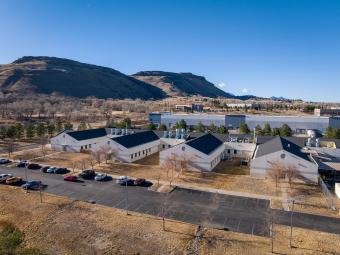
The Critical Minerals Innovation and Commercialization Hub will be housed at a newly acquired 50,000-square-foot facility in Golden, Colorado. The hub will bring together government, industry, entrepreneurs, researchers and students to test and scale new technologies for mineral processing, recovery, refining, recycling and advanced materials— and ultimately move those technologies into the domestic supply chain.
Earlier on Friday, Mines also participated in a roundtable on the critical minerals workforce hosted by the U.S. Department of Energy, National Security Council and National Energy Dominance Council. The session brought together university leaders, industry partners, government officials and students to examine how career and education pipelines are built and where federal support is needed most.
With the world's No. 1 minerals and mining engineering program and the nation’s only mineral and energy economics program, Mines brings expertise across the full mineral value chain — from discovery and extraction to processing and recycling to economics, policy and workforce development. In just three years, Mines has doubled the enrollment in its undergraduate mining engineering program and will launch a new minor this fall in Mineral Processing and Extractive Metallurgy, the first step toward a full undergraduate major.

About Mines
Colorado School of Mines is a public R1 research university focused on applied science and engineering, producing the talent, knowledge and innovations to serve industry and benefit society – all to create a more prosperous future.