Mines graduates have been contributing to the critical minerals field since before critical minerals became a household term, building expertise in exploration, processing, systems analysis and decision-making that now anchors global conversations.
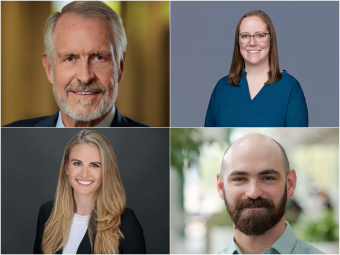
Here are four Mines alumni making a mark in the field today:
Jerry Grandey ’68: Board Chairman, Rare Element Resources

The opportunity to connect with other Mines alumni was what convinced Jerry Grandey ’68 to get involved with Rare Element Resources, a strategic materials company that owns the Bear Lodge Rare Earth Project in Wyoming.
The former president and CEO of Cameco, one of the world’s largest uranium mining and processing company, only knew a little about rare earth elements since they’re often found with minor concentrations of uranium. But the solvent extraction process used to separate the 17 elements from each other is similar to how uranium is recovered—except with a lot more steps, Grandey said.
“Experience taught me that you don’t go from finding a deposit to using a new processing technology—you need to go through the various bench, pilot and demonstration steps first,” Grandey said.
Rare Element Resources is developing a novel separation technology that is less capital and operationally intensive and more environmentally benign than traditional options. Initial operations at the company’s rare earth processing and separation demonstration plant in Wyoming began earlier this year. The company is also advancing permitting for the Bear Lodge deposit.
“Perseverance, technical acumen and the ability to handle a multitude of different things is ultimately what leads Mines graduates to be looked at to ‘be in the room,’” Grandey said. “Mines graduates are bright enough to understand there is a huge policy dimension to mineral development, as well.”
Kimberly Mills ’06, PhD ’14: Principal Metallurgist, SRK Consulting
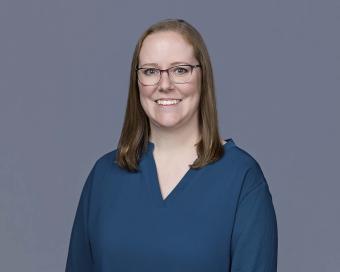
Rare earths, cobalt, lithium, graphite, copper—Kimberly Mills ’06 PhD ’14 has worked on them all as a process engineer and metallurgist for the world’s largest mining companies, smaller ventures and consultant firms.
“The critical minerals challenge is interesting to me because I feel like I’m making a difference,” Mills said. “In the critical minerals space, I’m not just helping a company, I’m helping society.”
No one was really talking about “criticality” when she first started working in the copper industry after earning her bachelor’s degree in metallurgical and materials engineering. But copper’s importance was clear—when she returned to Mines for her PhD, her industry-sponsored research with the Kroll Institute for Extractive Metallurgy focused on enargite, a copper arsenic sulfide mineral, and developing a hydrometallurgical process to remove the arsenic for a cleaner copper concentrate.
As the conversation and terminology have changed, Mills has translated that background across commodities. The metals and chemistry may be different, but whether copper or cobalt, the questions she asks about mineralogy, particle size and other factors are the same, she said. Today, Mills is principal metallurgist for SRK Consulting, an international mining consultancy firm, working on copper, gold and critical mineral projects around the world.
“People within the company come to me for questions on rare earths now,” Mills said. “The knowledge I developed at Mines—the options and typical flow sheets we see for these types of projects—it applies to all of these different minerals.”
Braeton Smith MS ’14, PhD ’18: Energy Economics Group Leader, Argonne National Laboratory

The increased attention to critical minerals is validating for Braeton Smith MS ’14, PhD ’18. An energy economist at Argonne National Laboratory, Smith is the co-author of the 2023 U.S. Department of Energy Critical Materials Assessment, which helps guide the department’s research and development strategy.
“I’m excited that decision-makers at all levels are taking these issues seriously,” Smith said. “Thoughts that have been floating in the ether for 10 years are finally starting to happen.”
Smith, who earned his degrees in mineral and energy economics during the early days of the Critical Minerals Innovation Hub (CMI) at Mines, now leads a team of economists doing critical mineral supply chain research at Argonne. That team includes a growing contingent of Orediggers, not only because of their strong training in computational economics but also their deep domain interest, he said.
“If you really care about minerals and markets, Mines is still the place to do those kinds of things,” Smith said. “You learn how to be interdisciplinary. You learn how to listen to engineers and people doing other kinds of research. It makes you think about these problems more deeply.”
Smith is currently working on the 2026 DOE Critical Materials Assessment, set for release this fall.
“Criticality is dynamic,” Smith said. “To me, it’s always interesting to think about which materials could create future problems.”
Allie Anderson MS ’15, PhD ’17: Technical Expert, Nonferrous Metals, RHI Magnesita
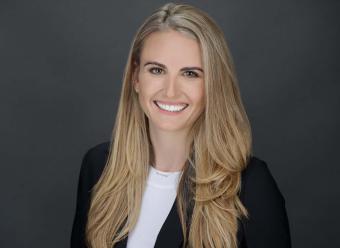
Allie Anderson MS ’15, PhD ’17 caught the extractive metallurgy bug as an undergrad. Her professor at Gonzaga just happened to be a Mines alum—the late Pat Ferro PhD ’94 became a mentor and encouraged her to attend Mines for a graduate degree.
“He put up a picture of a blast furnace in class one day, and I was hooked immediately—I knew I wanted to work with molten metal for the rest of my life,” Anderson said.
At Mines, Anderson conducted research in the Kroll Institute for Extractive Metallurgy, where she was first introduced to critical minerals. CMI funded her master’s thesis on the primary production of rare earth metals, and she completed her PhD on lead recycling. Today, she works as a technical expert in nonferrous metals for RHI Magnesita, one of the largest refractory suppliers in the world, helping improve the efficiency, reliability and scalability of the high-temperature units necessary for pyrometallurgical processes. RHIM customers use pyrometallurgical processes to extract highly critical metals as well as industrial base metals like copper, lead, zinc and nickel from diverse feedstocks.
“It’s one thing to mine the metal-containing material from the ground or post-consumer sources,” Anderson said. “But if we don’t have the plant infrastructure and the expertise to process that material, we still won’t have a domestic supply of those metals.”
In Anderson’s mind, industry focus is what sets Mines apart. “Mines students are always in the room with industry and understand how to scale the kind of stuff they do in the lab to industrial-level work,” she said.
“That mindset is attractive for the critical minerals discussion, because it’s a real-world problem that requires practical, deployable solutions now.”

About Mines
Colorado School of Mines is a public R1 research university focused on applied science and engineering, producing the talent, knowledge and innovations to serve industry and benefit society – all to create a more prosperous future.