Modern life runs on critical minerals—rare earths, lithium, cobalt and other elements fuel smartphones, satellites, energy systems, medical devices, defense technologies and more.
But before they can power technology, the raw minerals must be extracted and processed, creating myriad challenges from a technical, economic and geopolitical standpoint.
Mining engineering experts at Colorado School of Mines stand ready to speak with journalists about this important topic – from mine development and unconventional sources of critical minerals to current and emerging technologies for processing and refining raw minerals to social acceptance of new mine projects.
Contact Erich Kirshner, media relations specialist, at erich.kirshner@mines.edu to coordinate an interview.
Our experts include:
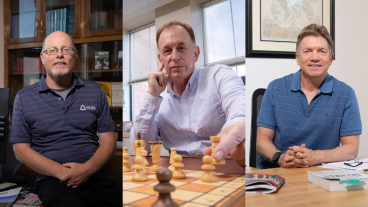
Corby Anderson, Director of the Kroll Institute for Extractive Metallurgy and Harrison Western Professor of Mining Engineering
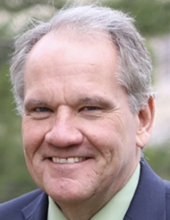
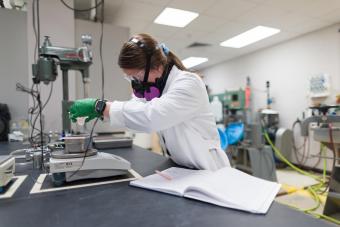
Anderson’s expertise lies in mineral processing, extractive metallurgy, waste treatment, and recycling. Anderson is especially concerned about a lack of critical minerals processing and refining capability in the U.S.
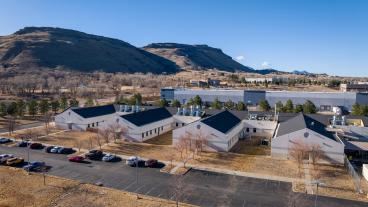
The Kroll Institute for Extractive Metallurgy (KIEM) is one of the world’s foremost institutions in mineral processing and extractive metallurgy. KIEM was created in 1974 through an endowment from Dr. William J. Kroll, creator of the technologies that built the world’s titanium and zirconium industries.
Elizabeth Holley, associate professor of mining engineering
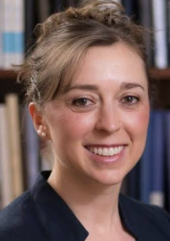
Holley works on the technical and socio-technical problems involved with mineral exploration, mine development, production and reclamation. She leads an interdisciplinary team of scientists and scholars researching the intersection of technical, economic, social and political sustainability of mining, particularly when it comes to critical minerals. Holley’s paper in Science about the availability of critical minerals in mine waste continues to be a focus of interest.
Priscilla Nelson, professor of mining engineering

A former senior advisor to the director of the National Science Foundation, Nelson’s focus is on geological and rock engineering. Currently she is working on research around mine tailings engineering and management, especially as it relates to critical minerals. Nelson is former president of the Geo-Institute of the American Society of Civil Engineers (ASCE) and the founder of The Tailings Center at Mines
Nicole Smith, associate professor of mining engineering

Smith is a cultural anthropologist who studies how communities experience and respond to mineral development projects. Her research examines public perceptions of, engagement with, and reactions to, the rapid expansion of critical mineral supply chains across the United States. Drawing on her fieldwork in Africa and South America, she brings perspective to how global resource transitions are lived and understood in diverse local contexts.
Erik Spiller, research professor of metallurgical and materials engineering, and adjunct professor of mining engineering

Spiller has more than 40 years of experience in mineral processing, including senior management positions in research, operations, equipment and engineering companies. At Mines, Spiller teaches mineral beneficiation, especially related to particulate separation, and directs research in mineral processing as a member of the KIEM.

About Mines
Colorado School of Mines is a public R1 research university focused on applied science and engineering, producing the talent, knowledge and innovations to serve industry and benefit society – all to create a more prosperous future.