When Congress and federal agencies grapple with how to secure and strengthen critical mineral supply chains, meet increasing energy demands, build new and repair existing infrastructure and more, they are increasingly turning to Mines for trusted expertise and actionable, data-driven solutions. Mines faculty and alumni are advancing research and innovation in these key areas while also providing testimony that informs national policy.
Three recent examples—all related to critical minerals and mining challenges—show how Orediggers are both driving innovation and helping guide policies that define the future of energy, infrastructure, defense and the environment.
A vision for the “mining of the future”
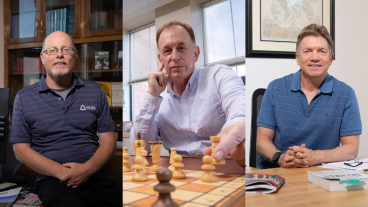
Elizabeth Holley, associate professor of mining engineering, appeared before the House Select Committee on the Chinese Communist Party’s Critical Minerals Policy Working Group in September 2024 to explore the need to develop a skilled domestic workforce to support U.S. economic, energy and national security through the responsible sourcing of critical minerals. With low enrollments in mining engineering programs and nearly 50 percent of the U.S. mining workforce—about 220,000 professionals—expected to retire by the end of the decade, the current talent pipeline is insufficient to meet the growing demand for minerals.

“Achieving increased domestic mineral production that is both environmentally sustainable and socially responsible will require innovation across the entire mining value chain,” Holley said. “To meet this challenge, we must develop an interdisciplinary workforce capable of designing and implementing new approaches to mineral exploration, mine production, processing, and reclamation.”
Holley leads a National Science Foundation-funded interdisciplinary research team dedicated to the responsible development of critical minerals in the U.S. Through partnerships with industry, government and community stakeholders, her team brings unique insights to domestic mineral and mining challenges, including the need for an innovative minerals workforce.
In her testimony, Holley discussed Mines’ vision for the “mining of the future,” which aligns with students’ interest in environmental stewardship, innovation and social impact. She emphasized the need for increased investment in mining and mineral R&D to address complex engineering and social challenges, as well the need for greater coordination among academia, industry and government to meet the strategic critical mineral objectives of the United States.
Linking critical minerals, national security and economic stability
Where Holley emphasized the workforce, Morgan Bazilian, director of Mines’ Payne Institute for Public Policy, drew the connection between domestic mining, national security and economic stability. Testifying before the U.S. House Natural Resources Subcommittee on Energy & Minerals in February 2025, Bazilian explained that minerals are “foundational across the modern economy” and increasingly indispensable to American defense, prosperity and energy security.

Bazilian urged lawmakers to take strategic steps to shore up supply chains, including expanding the critical mineral stockpile, streamlining the permitting process, supporting the mining workforce, enhancing mineral supply chain transparency in government procurement and reviving the U.S. Bureau of Mines.
“These actions are not only feasible but would also be effective in bolstering mineral supply chains for goods that are critical to U.S. national security,” he said.
Bazilian’s expertise and recommendations arrived at a pivotal moment. Intensifying global competition for resources and rising geopolitical uncertainties have underscored the urgency of securing critical minerals. Appearing alongside industry and academic peers, Bazilian reinforced Mines’ reputation as a trusted source of data-driven policy analysis. Through the Payne Institute, Mines offers thought leadership at the intersection of technology, economics, energy transition and national security—helping Congress and federal agencies understand not only where minerals come from but also how policy choices ripple through supply chains and markets.
Investing in the next generation of mining leaders
For Bill Zisch ’79, J. Steven Whisler Head of Mining Engineering at Mines, the most important critical resource in the mining industry is its people. In June 2024, he testified before the U.S. Senate Health, Education, Labor and Pensions Subcommittee on Employment and Workplace Safety on how to strategically build the critical minerals workforce.

As energy goals and advanced technologies drive unprecedented demand for critical minerals, Zisch warned that the U.S. cannot achieve its objectives without investing in the next generation of mining professionals.
“When it comes to minerals and their role in our modern world, our most critical resource is our people—skilled professionals equipped to responsibly manage our Earth’s resources and solve complex engineering and social challenges,” he told senators.
Zisch outlined a vision for mining education and research that responds to the scientific, social and environmental challenges facing the sector and integrates innovation, advanced technologies and sustainable practices to optimize resource utilization, increase productivity and minimize environmental impact.
“At Mines, we are working to educate and prepare students for the essential link between mining, minerals, responsible resource management and sustainable energy,” he said. “The opportunity before us is to engage and inspire the next generation of mining and mineral leaders with a passion for impactful careers in a sector innovating to support our economic, energy and security future.”
His message reinforced what sets Mines apart: an unmatched ability to provide expertise that spans the entire mining and mineral lifecycle—from exploration and production to community engagement, economics, finance and public policy. That comprehensive perspective positions Mines as the go-to source for lawmakers shaping the workforce and technologies that will power the nation’s future.

About Mines
Colorado School of Mines is a public R1 research university focused on applied science and engineering, producing the talent, knowledge and innovations to serve industry and benefit society – all to create a more prosperous future.