In summer 2025, Cece DiSibio, an engineering physics major at Colorado School of Mines, conducted cutting-edge research in quantum information science through the Open Quantum Initiative (OQI) Undergraduate Fellowship.
DiSibio was one of 27 undergraduate students selected nationwide to participate in the program, which places students at leading institutions across the Midwest to help build the future quantum workforce. Hosted by the Chicago Quantum Exchange, OQI connects undergraduates with hands-on research experiences in quantum information science (QIS).
DiSibio was one of five OQI fellows conducted research at the U.S. Department of Energy’s Argonne National Laboratory, developing new technologies for QIS. Here’s what she had to say about the experience.
Q: What did you work on in your OQI fellowship?
Cece DiSibio: We built a very fancy microscope to look at little defects, called vacancies, in different crystal materials. Vacancies have a lot of potential for use as qubits in quantum computers.
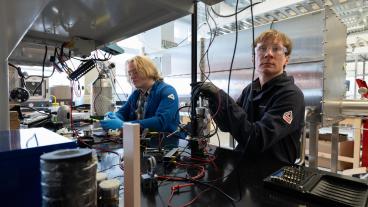
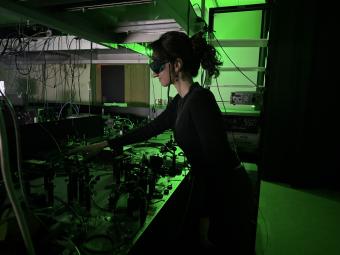
With guidance from my mentor, I designed and constructed an optical scanning microscope from scratch. Then I used this microscope to measure and visualize the photoluminescent features of crystal materials. My role also included writing a script for computational automation of the measurement.
Q: What new perspectives on QIS has the OQI experience given you?
DiSibio: You can definitely find your way into QIS, no matter what field you’re in. We got to visit PsiQuantum and Applied Materials in California, and we saw what it looks like to actually work for these companies, which was very insightful. A lot of quantum computing companies are just startups right now and are working to get bigger.
I also learned a lot about the different things we can use as qubits — vacancies are one of those things, but there are also photonic qubits and superconducting qubits. Before this, I thought there was only one way to make a quantum computer, but there are many ways.
Q: What’s next for you?
DiSibio: The fellowship helped me decide that I want to pursue a master’s in quantum engineering. It’s really cool because Mines offers that degree, so I’m going to stay at Mines, and then I think I’m going to work in industry for a little bit. Colorado is becoming a hub for quantum, which is awesome.
Q: What do you enjoy doing outside of research?
DiSibio: During the program, I lived with seven other roommates, and we became really good friends. We played a lot of spades — every single day. I also like going on hikes a lot and have gotten into sewing.
Q: Any last thoughts?
DiSibio: If you’re interested in science at all, don’t be afraid to pursue it and to apply to these kinds of internships and fellowships. I applied to OQI expecting to get rejected. What I mean is, you can do anything if you’re not afraid to try. I started learning physics in community college with zero prior experience, and I’ve been given awesome opportunities like this fellowship. I really believe anyone could do that.
Editor's Note: This piece was adapted from Argonne National Laboratory. Photo courtesy of ANL/Diana Elizabeth Dancea.

About Mines
Colorado School of Mines is a public R1 research university focused on applied science and engineering, producing the talent, knowledge and innovations to serve industry and benefit society – all to create a more prosperous future.