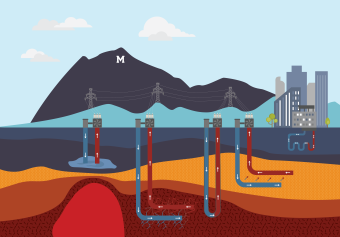
Geothermal energy, a renewable source of power generated by the Earth's core, is currently contributing only 2 percent to U.S. renewable electricity generation. Despite this, estimates have shown there’s sufficient heat inside the Earth to meet total global energy demand twice over.
Petroleum engineering disciplines are posed to make significant contributions in the development of geothermal energy production for electricity generation by translating technologies used for production of oil and gas to geothermal fields.
At Colorado School of Mines, the Payne Institute for Public Policy hosted a Geothermal Solutions Symposium on Dec. 2, bringing together academics, industry, non-profits, regulators, and policymakers to discuss advancing geothermal technology and accelerating project development.
Colorado School of Mines has a variety of geothermal experts, including those listed here, who stand ready to answer questions from journalists about this rapidly expanding energy field. Contact Erich Kirshner, media relations specialist, at erich.kirshner@mines.edu to coordinate an interview with any of Mines’ geothermal experts.
Will Fleckenstein, Director of Strategic Business Development, Office of Global Initiatives and Business Development and Founder of GTO Technologies
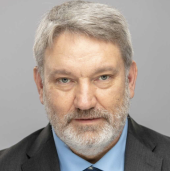
Fleckenstein is the co-founder of GTO Technologies, a Colorado School of Mines-backed start-up devoted to the commercialization of patented and patent pending enhanced geothermal system (EGS) technology. Fleckenstein was the principal investigator of a 3-year, $5.3 million DOE grant as part of the DOE-funded Utah-FORGE program that led to the development of a first generation EGS technology.
Mohamed Shafik Khaled, assistant professor of petroleum engineering
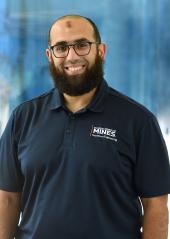
Khaled is an expert on geothermal drilling, high-temperature well construction, and multi-criteria risk assessment for geothermal projects. His research uses field data, laboratory experiments and scientific machine-learning models to improve real-time management of downhole temperatures and drilling dysfunction, enabling safer, more cost-effective “geothermal-anywhere” developments and the repurposing of existing oil and gas wells for geothermal energy.
Jennifer Miskimins, F.H. Mick Merelli/Coterra Energy Distinguished Department Head Chair of Petroleum Engineering

Miskimins, head of Mines’ petroleum engineering department and the Society of Petroleum Engineers (SPE) 2026 President, is an expert in enhanced stimulation and hydraulic fracturing techniques as they apply to geothermal applications. Her work focuses on optimizing the fluid flow capabilities of geothermal systems to enhance their energy generation capabilities. She is interested in the conversion of these techniques from the oil and gas industry to other subsurface settings.
Anna Littlefield, geothermal and CCUS program manager for the Payne Institute
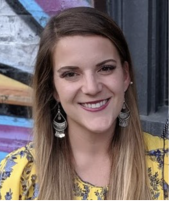
Littlefield is a geochemist and policy expert, with 13 years of experience working in oil and gas, CCUS, and Geothermal. She has a strong foundation in subsurface exploration, characterization, and development, and has worked in private industry, at the National Lab of the Rockies (formerly NREL), and in academia. Littlefield serves on the Governor's Geologic Storage Stewardship Enterprise Board, chairs the Energy Geology Division for the Geological Society of America, and co-founded the American Carbon Management Association (ACMA).
Sebnem Düzgün, Fred Banfield Distinguished Endowed Chair and Professor of Mining Engineering
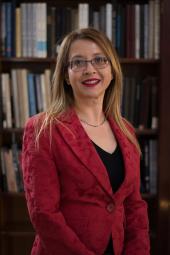
Düzgün is the co-founder of Thermofilic, LLC, a Mines start-up delivering AI-based precision-exploration services. Thermofilic generates high-resolution probability maps that estimate the footprint of geothermal resources, providing exploration teams with transparent, explainable decision support on where to drill and why.

About Mines
Colorado School of Mines is a public R1 research university focused on applied science and engineering, producing the talent, knowledge and innovations to serve industry and benefit society – all to create a more prosperous future.