At Mines, collaboration with industry is embedded in the university’s DNA. For generations, Mines has maintained close ties with industry partners, many of them companies led and staffed by alumni. Those connections often translate directly into research opportunities that benefit both Mines and industry, shaping solutions to real-world challenges, driving innovation and preparing skilled Orediggers to get the job done.
Mines alumni frequently take on leadership, technical and advisory roles at companies around the world and use their influence to champion Mines and the work happening on campus. When that influence flows back to the university, it helps shape research agendas, fund cutting-edge projects and support students. The result is an engagement model that advances Mines’ research missions while delivering tangible value to industry.
Two long-standing examples of this model in action are the Fracturing, Acidizing Stimulation Technology (FAST) Consortium and the Advanced Steel Processing and Products Research Center (ASPPRC), commonly known as the Steel Center.
Alumni as industry champions
Founded in 2004, FAST was built around a clear mission to conduct applied, industry-driven research in oil and gas well stimulation. From the beginning, its success depended on close collaboration with industry—and on alumni who understood both the technical demands of research and the realities of industry practice.
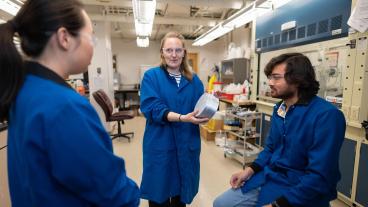
“At that point in time, there weren’t a lot of government opportunities,” said Jennifer Miskimins MS ’00, PhD ’02, petroleum engineering professor and FAST director. “It made a lot more sense for me to seek out industry funding. There also weren’t a lot of graduate students being trained with advanced degrees in this particular area, so that was a driver in my own mind—to give an opportunity for students to do research in this area.”
As FAST took shape, alumni became essential advocates inside their companies who understood Mines’ research strengths and could translate industry needs into meaningful research projects.
“Having a champion who understands Mines’ capabilities, someone who understands what our research capabilities are, both from a laboratory standpoint and an expertise standpoint is really important,” Miskimins explained. “I can see that difference when talking to an alum about potentially joining FAST. It’s a lot different than when I talk to somebody who’s not. The conversation can be a little bit more targeted with an alum.”
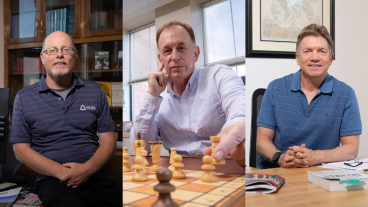
One of those champions is Brent Kebert MS ’20, PhD ’22, who was introduced to FAST as a graduate student while working under Miskimins and later returned as an industry representative. Today, he helps guide FAST projects on behalf of Chevron.
“We’re able to help direct where projects go and have a say on what type of work the students are working on,” Kebert said.
That guidance helps ensure FAST research remains immediately relevant. “It gets the topics that people want to see or might be experiencing issues with that they really need to have solved,” Miskimins said. “And because of that, not only are we working on topics that are relevant, but my students are also working on topics that are relevant, which gives them more opportunity to get hired. There’s a real win-win in that.”
For many industry partners, FAST’s value lies in access to Mines’ expertise and facilities. “The research facilities, the type of projects going on, the faculty that teach there are top-tier globally, so to be able to leverage those resources and maintain those relationships and reap the benefits of the work that goes on at Mines has been significant for sure,” Kebert said.
Alumni engagement, he added, plays a critical role in shaping research outcomes. “Alumni engagement is very critical to university research,” Kebert said. “Having that consistent alumni interface with people who are actually working and saying these are the problems we’re trying to solve, and these are the kind of boundary conditions we actually have to work with, that really starts to shape the minds of young students to see how things are going to be versus just what’s in a textbook.”
Opportunities for up-and-coming talent
While faculty researchers and industry benefit from these collaborations, students also gain significant advantages that help prepare them for careers in industry. Through ASPPRC, students work closely with industry sponsors over multiple years, gaining insight into both technical challenges and professional expectations.
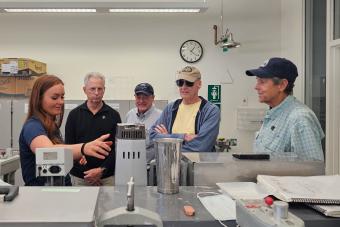
“If students are doing a master’s or PhD, they have two to four years or so to get to know the sponsors, see what they’re doing and if that might be of interest to them and vice versa,” said Kip Findley, professor of metallurgical and materials engineering and ASPPRC director. “Then we have alumni who are part of these companies who are, in turn, recruiting student for advanced degree positions at their companies.”
Mentorship plays a key role in that process. “Every project that we have in the Center has multiple industrial mentors,” Findley said. “Often, that mentor list consists, at least partly, of Mines alumni who have gone through the program and are now working in industry and leading research and development or product development or product application programs, and they’re bringing that expertise back and helping facilitate research center efforts.”
Because those mentors understand Mines’ curriculum and capabilities, they help shape projects with both academic and industry impact. “The Mines alumni mentors know exactly the training the students have and the capabilities we have access to, so they can gear their mentorship towards what they know students can do,” Findley explained. “They understand what kind of projects would fit the Center really well and the type of projects that would have high impact for industry and then marry those things together effectively.”
That engagement often extends beyond research alone. “Sometimes these research partnerships are also synergistic with other partnerships that Mines develops with alumni,” Findley said. “There are a lot of examples of Mines alumni who are not only participating in the research process but might also serve on department advisory boards and committees. They’re also thinking about the educational processes and strategic initiatives. I think the benefits really extend broadly across the university.”
Matt Merwin PhD ’97, a longtime representative for U. S. Steel, has seen the value of that continuity firsthand. “It’s been my pleasure to be able to maintain that relationship,” he said. “U. S. Steel has been a sponsor continuously of the program for more than 30 years at this point.”
For Merwin, the consortium model was attractive from the start. “As an undergraduate wanting to pursue graduate school, the consortium structure and constant engagement with industrial sponsorship was one that was really compelling to me,” he said.
He credits Mines faculty with making those partnerships work. “Corporate engagement is a real strength of the university,” Merwin said. “Faculty understand the challenges corporations might have in funding research and limitations and IP and how all those aspects can really complicate such relationships. Mines faculty are really experienced with that and find solutions that are mutually acceptable.”
For alumni looking to get involved with research at Mines, Merwin encourages them not to wait. “I’d certainly encourage them to reach out and see what opportunities exist.”
Learn how you can get involved with research at Mines by emailing rtt@mines.edu.

About Mines
Colorado School of Mines is a public R1 research university focused on applied science and engineering, producing the talent, knowledge and innovations to serve industry and benefit society – all to create a more prosperous future.