Energy and Materials


Department of Energy creates ambitious program to reduce carbon emissions by 50 to 52 percent by the end of the decade, secure a 100 percent clean electrical grid by 2035 and reach a net-zero carbon economy by 2050.
“All of this is about AI, but it’s also not about AI," faculty developer Carter Moulton said. "It’s about practices that support students and learning and build trust and clear expectations."
GelSana was founded in 2020 by Dr. Melissa Krebs, associate professor in chemical and biochemical engineering at Mines. GelSana’s first product is a novel polymer-based gel called Cleragel, designed to improve wound healing by reducing inflammation.
KFF Fellows each receive $12,000 in unrestricted funding to support their pursuit of careers in research.
The two institutions to collaborate on projects involved with energy storage, high-temperature fuel cells, geothermal energy systems, nuclear fuel cycle and reactor engineering, environmental science, and next-generation mining science and engineering.
The first-of-its-kind prototype is capable of generating almost 30 kilowatts of electric power from natural gas and low-carbon fuels.
Colorado School of Mines awarded a total of 72 doctorates and 270 master's degrees to August and December graduates at the Dec. 15 ceremony.
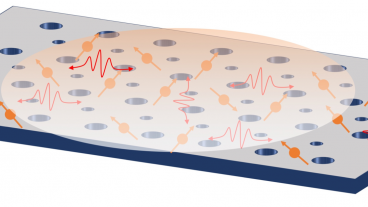
In a paper recently published in the journal Nature, a team of physicists from Colorado School of Mines, Duke University, Michigan State University, and the University of Maryland realized the dream of building a 1D magnet using a trapped-ion quantum simulator.
Mines researchers are partnering with Lunar Outpost to compete in the NASA Break the Ice Challenge.
The Mines-ACC team is one of just 12 selected across North America for the three-year competition in which student teams are tasked to design, build, test and integrate an advanced EV battery into a future Stellantis vehicle